Choosing a Solar Company in Faisalabad for Industry in 2026
Finding the right solar company in Faisalabad has become a boardroom priority, not just a facilities decision. As the textile capital of Pakistan, Faisalabad runs thousands of power-hungry looms, dyeing units, and spinning mills — and every rupee of electricity cost eats directly into export margins. In 2026, commercial solar is the single most effective lever factory owners have to stabilise energy bills and keep production running through outages.
This guide focuses on industrial and commercial installations: how to evaluate vendors, size large arrays, and calculate a realistic return on investment.
Why Faisalabad Industry Is Going Solar
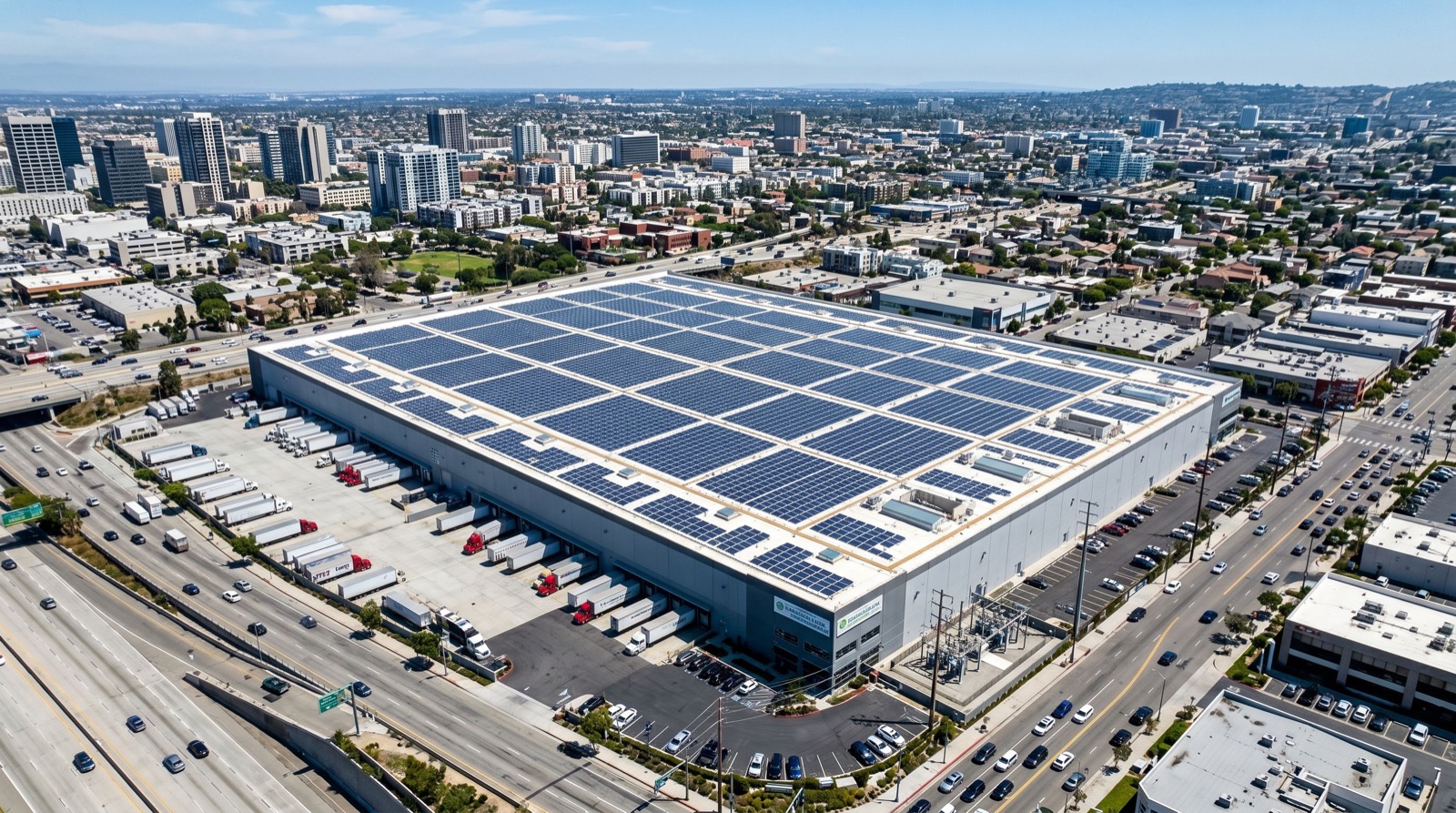
Faisalabad’s factories face a double squeeze: rising grid tariffs and gas shortages that disrupt captive generation. Rooftop and ground-mount solar answers both. A large shed roof that once sat idle can now host hundreds of kilowatts of generation capacity.
Pakistan’s renewable momentum is well documented. The International Renewable Energy Agency (IRENA) reports that solar module prices have fallen by roughly 90% over the past decade, making large commercial arrays cheaper than ever to deploy.
Partnering with an experienced solar company in Faisalabad means your system is engineered around three-phase industrial loads and heavy inductive machinery, not a simple residential template.
The textile sector advantage
Spinning and weaving run mostly during daylight, which aligns beautifully with solar generation. That synchronisation lets factories self-consume a high share of their output, maximising savings without needing massive battery banks.
- Daytime production matches peak solar output
- Large flat roofs ideal for high-capacity arrays
- Reduced reliance on expensive diesel backup
- Stronger ESG credentials for export buyers
How Do You Evaluate a Solar Company in Faisalabad?
Not all vendors are equal. Industrial projects demand engineering depth, bankable warranties, and proven commissioning experience. Ask hard questions before signing.
- Request references from similar-sized factory installations.
- Confirm the use of Tier-1 panels and reputable string or central inverters.
- Check net-metering experience with FESCO specifically.
- Review the warranty structure and local service team.
- Demand a transparent, itemised energy-yield estimate.
The best vendors behave like long-term reliable local experts, offering monitoring and maintenance contracts rather than a one-off sale.
System Sizing and Cost Comparison
Commercial sizing starts from your sanctioned load and daytime consumption profile. The table below compares typical industrial tiers.
| System Size | Typical Use | Approx. Roof Area | Daytime Offset |
|---|---|---|---|
| 25 kW | Small workshop / warehouse | ~180 m² | Partial |
| 100 kW | Mid-size factory unit | ~700 m² | High |
| 500 kW+ | Large spinning / dyeing mill | ~3,500 m² | Very high |
Larger systems enjoy better per-watt economics, so consolidating rooftop and car-park canopy space pays off. Payback periods for well-run industrial installs often land between three and five years.
Financing the investment
Many banks now offer green financing for commercial solar, and State Bank refinancing schemes have supported renewable projects. Leasing and power-purchase agreements are also emerging, letting factories go solar with minimal upfront capital.
Heat, Dust, and Design Realities
Faisalabad summers are brutal, and neighbouring regions run even hotter. High ambient heat reduces panel efficiency, so good design uses raised mounting for airflow and heat-tolerant components. The same principles guide quality solar panels in Multan, where extreme temperatures make thermal engineering essential.
Dust is the other enemy. Industrial zones accumulate airborne lint and particulates that cut output if panels are not cleaned on a schedule.
- Use elevated racking for cooling airflow
- Select inverters rated for high ambient temperatures
- Plan routine cleaning, especially near lint-heavy units
- Install monitoring to catch soiling losses early
Grid Stability and Three-Phase Integration
Industrial loads are rarely gentle. Large motors draw heavy starting currents, and sensitive electronics in modern looms need clean power. A solar system for a Faisalabad factory must integrate with three-phase supply without disrupting production.
This is where engineering depth separates serious vendors from box-sellers. Properly configured inverters synchronise with the grid, manage reactive power, and ride through minor fluctuations. Poor integration causes nuisance tripping that halts a production line — an expensive failure in a mill running tight delivery schedules.
- Three-phase inverters sized to machinery start-up loads
- Protection relays that coordinate with factory switchgear
- Monitoring that flags phase imbalance before it causes faults
- Surge protection for sensitive control electronics
Planning around production schedules
Commissioning should be staged so it never stops the line. Experienced teams schedule tie-ins during planned maintenance windows or weekend shutdowns, keeping output uninterrupted. Discuss this explicitly before signing, because downtime during installation is a hidden cost many owners overlook.
A Realistic ROI Example
Consider a mid-size Faisalabad unit installing 100 kW on an idle shed roof. With production running through daylight hours, the mill self-consumes the vast majority of generation, offsetting units it would otherwise buy at full commercial tariff.
At current tariffs, that offset commonly translates into a payback window of roughly three to five years, after which the energy is effectively free for the remaining two decades of panel life. Factor in avoided diesel backup, and the economics improve further.
Measuring Return on Investment
ROI hinges on self-consumption ratio and tariff offset. A factory consuming most of its solar output on-site captures the full retail tariff value per unit, which is where the fastest paybacks come from.
Track these metrics after commissioning: specific yield (kWh per kWp), self-consumption percentage, and monthly bill reduction. A credible vendor provides a monitoring dashboard so finance teams can verify savings in real time.
Frequently Asked Questions
How much can a solar company in Faisalabad save my factory?
Industrial users with strong daytime consumption commonly cut grid bills by 40–70%, depending on system size and self-consumption. A detailed load study gives you an accurate figure before you invest.
Is net metering worth it for factories?
Net metering helps monetise weekend or holiday surplus, but most industrial value comes from self-consumption during working hours. Your installer should model both for FESCO connections.
How long does a commercial installation take?
A 100 kW system typically takes a few weeks from survey to commissioning, while larger multi-hundred-kilowatt projects may run one to two months including net-metering approvals.
What maintenance do industrial systems need?
Expect periodic panel cleaning, annual electrical inspections, and inverter servicing. Most reputable vendors bundle this into an operations and maintenance contract.
Conclusion
For Faisalabad’s industry, selecting the right solar company in Faisalabad is a strategic cost-control move that protects margins against volatile tariffs for decades. Prioritise engineering credibility, bankable warranties, and strong local service over the lowest headline price. Ready to lower your production costs? Book a professional load assessment and custom proposal today, and turn your factory roof into a profit centre.